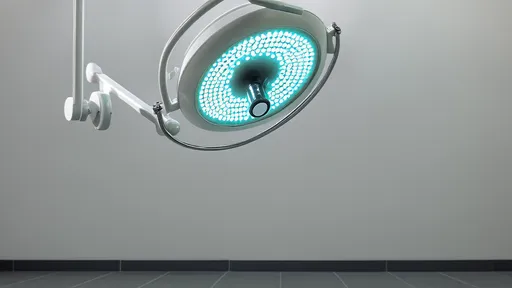
In the ever-evolving world of medical technology, innovation often draws inspiration from nature. One such groundbreaking development is the Firefly LED, a bionic cold-light surgical lamp that mimics the natural luminescence of fireflies. This cutting-edge device is revolutionizing operating rooms by offering unparalleled clarity, reduced heat emission, and enhanced precision during surgical procedures.
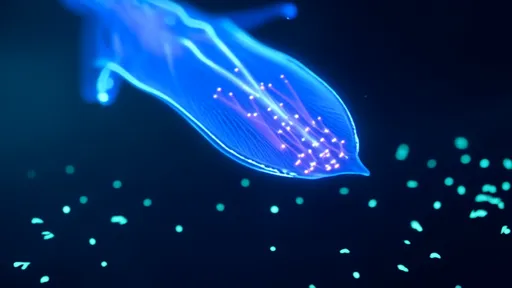
The concept behind the Firefly LED stems from the fascinating biology of fireflies. These insects produce light through a chemical reaction that emits almost no heat, a phenomenon known as cold light. Engineers and medical researchers have long been captivated by this natural efficiency, seeking to replicate it in artificial lighting. The result is a surgical lamp that not only illuminates the surgical field with exceptional brightness but also minimizes thermal interference, a critical factor in lengthy and delicate operations.
Traditional surgical lamps have relied on halogen or conventional LED lights, which, while effective, often generate significant heat. This heat can cause discomfort for both the surgical team and the patient, and in some cases, may even lead to tissue dehydration. The Firefly LED addresses these issues by utilizing advanced biomimicry. Its design incorporates specialized phosphors and optical filters that closely emulate the firefly's ability to produce cool, focused light. This innovation ensures that the surgical area remains at a stable temperature, reducing the risk of complications.
Another standout feature of the Firefly LED is its adaptive lighting capability. Much like how fireflies adjust their glow in response to environmental cues, this surgical lamp can dynamically modify its intensity and color temperature. Surgeons can tailor the light to match the specific requirements of different procedures, whether it’s a high-contrast setting for microsurgery or a softer hue for general operations. This flexibility enhances visual acuity and reduces eye strain, allowing medical professionals to perform with greater accuracy and comfort.
The impact of the Firefly LED extends beyond the operating room. Its energy-efficient design aligns with the growing demand for sustainable medical equipment. By consuming less power and producing minimal heat, the lamp contributes to lower hospital energy costs and a reduced carbon footprint. Furthermore, its durability and long lifespan mean fewer replacements, resulting in less medical waste. Hospitals adopting this technology are not only improving patient outcomes but also embracing eco-friendly practices.
Early adopters of the Firefly LED have reported remarkable improvements in surgical outcomes. Surgeons praise the lamp’s ability to provide consistent, shadow-free illumination, even during complex procedures. The reduced heat emission has been particularly beneficial in pediatric and neurosurgery, where maintaining a stable environment is paramount. Patients, too, have noted increased comfort during operations, as the cooler light mitigates the oppressive feeling often associated with traditional surgical lamps.
As the medical community continues to explore the potential of biomimicry, the Firefly LED stands as a testament to the power of nature-inspired innovation. Its development marks a significant leap forward in surgical lighting, combining the brilliance of fireflies with the precision of modern technology. With its myriad benefits, this bionic cold-light lamp is poised to become a staple in operating rooms worldwide, setting a new standard for excellence in surgical care.
The journey from firefly to operating room has been one of meticulous research and collaboration. Biologists, engineers, and medical professionals worked in tandem to decode the secrets of the firefly’s glow and translate them into a functional, life-saving tool. The success of the Firefly LED underscores the importance of interdisciplinary efforts in advancing healthcare technology. It also serves as a reminder that sometimes, the most profound solutions are found not in human ingenuity alone, but in the natural world around us.
Looking ahead, the potential applications of this technology are vast. Researchers are already exploring ways to adapt the Firefly LED’s principles for other medical devices, such as endoscopic tools and diagnostic equipment. The lessons learned from this project could pave the way for a new generation of biomimetic innovations, each designed to enhance patient care and streamline medical practices. For now, the Firefly LED shines brightly as a beacon of progress, illuminating the path toward a future where nature and technology work hand in hand.

By /Aug 12, 2025

By /Aug 12, 2025
By /Aug 12, 2025

By /Aug 12, 2025

By /Aug 12, 2025

By /Aug 12, 2025

By /Aug 12, 2025

By /Aug 12, 2025
By /Aug 12, 2025

By /Aug 12, 2025
By /Aug 12, 2025

By /Aug 12, 2025

By /Aug 12, 2025
By /Aug 12, 2025
By /Aug 12, 2025

By /Aug 12, 2025

By /Aug 12, 2025

By /Aug 12, 2025

By /Aug 12, 2025

By /Aug 12, 2025