The Arctic is one of the harshest environments on Earth, where temperatures can plummet to -50°C (-58°F) and winds howl relentlessly across the frozen landscape. Yet, the polar bear (Ursus maritimus) thrives in these extreme conditions, thanks in large part to its remarkable adaptations. Among these, the unique hollow structure of its fur—specifically the medullary cavity within each hair—plays a critical role in insulation. This biological marvel has fascinated scientists for decades, offering insights into how nature engineers survival in the coldest corners of the planet.
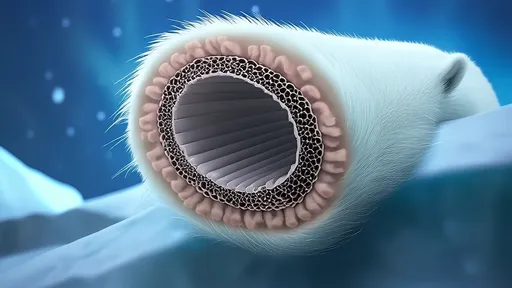
At first glance, polar bear fur appears white, but it is actually translucent. The hollow core of each hair, known as the medullary cavity, scatters and reflects visible light, giving the fur its iconic snowy appearance. Beyond its visual deception, this hollow structure is a masterclass in thermal efficiency. Unlike solid hairs, which would conduct heat away from the body, the air-filled cavities act as a barrier, trapping warmth close to the skin. This design is akin to the double-paned windows in modern energy-efficient buildings, where the layer of air between the panes reduces heat transfer.
The medullary cavity’s insulating properties are further enhanced by the density of the fur itself. A single square inch of a polar bear’s skin can host up to 10,000 hairs, each meticulously designed to minimize heat loss. The hollow cores are not uniform; they vary in size and shape, creating a labyrinth of air pockets that disrupt the flow of cold air toward the body. This intricate system ensures that even in the face of biting Arctic winds, the bear’s core temperature remains stable. It’s a testament to evolution’s precision—every strand of fur is a tiny fortress against the cold.
Interestingly, the hollow hairs also contribute to the polar bear’s buoyancy. When swimming, the air trapped within the medullary cavities provides additional lift, allowing the bear to navigate icy waters with ease. This dual function—insulation and flotation—highlights the efficiency of natural design. Engineers studying biomimicry have looked to polar bear fur as inspiration for advanced materials, such as thermally insulating fabrics for Arctic explorers or even lightweight, buoyant suits for marine applications. The bear’s fur is not just a survival tool; it’s a blueprint for human innovation.
However, the hollow structure of polar bear fur is not without its vulnerabilities. Oil spills, for instance, can clog the medullary cavities, stripping the fur of its insulating properties. A oil-coated polar bear is effectively left defenseless against the cold, as the matted fur loses its ability to trap air. This underscores the delicate balance of Arctic ecosystems and the profound impact of human activity on wildlife. Conservation efforts must account for these physiological nuances, recognizing that even the most resilient species are finely tuned to their environment.
Research into the medullary cavity’s mechanics has also revealed surprising parallels in other species. For example, the hairs of some desert-dwelling animals, like the Saharan silver ant, exhibit similar hollow structures—but for the opposite purpose. Instead of retaining heat, their hairs reflect sunlight to keep the body cool. This duality demonstrates how evolution repurposes fundamental designs to meet diverse challenges. The polar bear’s fur, then, is not an isolated wonder but part of a broader narrative of adaptation.
As climate change reshapes the Arctic, understanding these adaptations becomes even more urgent. Rising temperatures and melting sea ice threaten the polar bear’s habitat, forcing the species to adapt—or perish. The hollow hairs that once guaranteed survival may now face unprecedented stressors. Scientists are racing to document these mechanisms before they are lost, hoping to glean lessons that could inform both conservation and technology. The polar bear’s fur is more than a biological curiosity; it’s a living archive of evolutionary ingenuity.
In the end, the story of the polar bear’s hollow fur is a reminder of nature’s resilience and fragility. It showcases the brilliance of adaptation while warning of the limits to what even the most specialized species can endure. As we look to the Arctic for clues about our planet’s future, the polar bear stands as both a symbol and a sentinel. Its fur, with its intricate, air-filled strands, is a testament to life’s ability to thrive in the most unforgiving places—but only if we preserve the conditions that make such miracles possible.
By /Aug 12, 2025

By /Aug 12, 2025
By /Aug 12, 2025

By /Aug 12, 2025

By /Aug 12, 2025
By /Aug 12, 2025
By /Aug 12, 2025

By /Aug 12, 2025
By /Aug 12, 2025
By /Aug 12, 2025

By /Aug 12, 2025

By /Aug 12, 2025
By /Aug 12, 2025
By /Aug 12, 2025
By /Aug 12, 2025
By /Aug 12, 2025
By /Aug 12, 2025
By /Aug 12, 2025

By /Aug 12, 2025

By /Aug 12, 2025