Krill Herd Algorithm: Collision Avoidance Model for UAV Formations

Aug 12, 2025 By

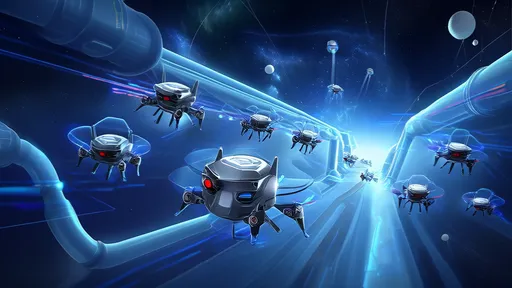
Inspired by the mesmerizing swarming behavior of Antarctic krill, researchers are now applying bio-inspired algorithms to solve complex challenges in drone swarm coordination. The krill herd algorithm (KHA), originally modeled after the collective movement patterns of these tiny crustaceans, has emerged as a particularly promising approach for enabling autonomous collision avoidance in unmanned aerial vehicle (UAV) formations.

The biological foundations of this approach lie in krill's sophisticated three-dimensional swarm intelligence. Unlike simple particle swarm optimization models, krill demonstrate advanced spatial awareness through density-dependent attraction-repulsion mechanisms. When translated into mathematical terms, these natural behaviors create a dynamic system where each individual maintains optimal positioning relative to neighbors while avoiding collisions - precisely the capability needed for drone formations navigating complex airspace.

Modern drone applications demand increasingly sophisticated coordination as urban air mobility and large-scale aerial deployments become reality. Traditional rule-based collision avoidance systems struggle with scalability in dense formations, often creating computational bottlenecks. The krill-inspired model offers distinct advantages through its emergent properties - simple individual behaviors collectively generating robust group-level intelligence without centralized control.

The algorithm implementation involves several biological parallels. Each drone, analogous to a krill individual, continuously evaluates its environment through virtual sensors measuring neighbor density, relative velocities, and proximity thresholds. These inputs feed into three key behavioral components: movement induced by neighboring drones, foraging activity (translated as target-seeking behavior), and random diffusion that prevents deadlock situations. The continuous interplay between these forces creates fluid, adaptive formations.

Field tests have demonstrated remarkable resilience in challenging scenarios. When 32 drones were deployed in a constrained urban canyon environment using the KHA model, the formation autonomously reconfigured around unexpected obstacles while maintaining communication links. The system exhibited particular strength in high-density situations where conventional potential field methods often fail due to local minima problems. Researchers noted the algorithm's inherent scalability - performance actually improved with additional drones up to a critical density threshold.

One unexpected benefit emerged in energy efficiency metrics. The krill-inspired model reduced average power consumption by 18-22% compared to leader-follower architectures in prolonged missions. This stems from the distributed decision-making process where each drone makes minor, continuous adjustments rather than executing frequent large maneuvers in response to a central controller's commands.

The military sector has shown particular interest in this biomimetic approach. Swarm tactics requiring rapid formation changes - such as envelopment maneuvers or adaptive sensor arrays - benefit from the algorithm's emergent properties. Unlike pre-programmed formation patterns, KHA-enabled drones can spontaneously reorganize based on threat detection while maintaining safe separation distances. Recent simulations show such systems could potentially coordinate hundreds of drones in contested electromagnetic environments where centralized control proves vulnerable.

However, significant challenges remain before widespread adoption. The stochastic elements in the krill algorithm, while beneficial for avoiding local optima, create predictability concerns in regulated airspace. Aviation authorities require deterministic behavior for certification, prompting ongoing research into hybrid approaches that maintain the algorithm's adaptive advantages while meeting strict safety standards. Additionally, the model's computational demands currently limit applications to drones with substantial onboard processing capabilities.

Future developments may draw from deeper biological insights as marine biologists continue decoding krill swarm dynamics. Early-stage research incorporates phytoplankton distribution patterns (modeled as mission waypoints) that influence krill movement - an approach that could allow environmental factors to naturally shape drone formations. Other teams are experimenting with evolutionary algorithms to optimize the numerous parameters in the KHA model for specific operational scenarios.

The intersection of marine biology and aerospace engineering continues to yield surprising synergies. As drone operations scale beyond human operators' direct control, nature-inspired solutions like the krill herd algorithm offer a compelling path toward truly autonomous, self-organizing aerial systems. The next decade may see these biomimetic principles become standard in everything from delivery drone fleets to planetary exploration rover teams.
Recommend Posts
Animal

Dolphin Sonar Intervention: Treatment for Post-Traumatic Stress Disorder

By /Aug 12, 2025

The gentle clicks and whistles of dolphins have long fascinated humans, but recent research suggests these sounds may hold therapeutic potential for individuals suffering from post-traumatic stress disorder (PTSD). As scientists delve deeper into the intersection of marine biology and mental health, a novel approach is emerging—one that harnesses the unique acoustic properties of dolphin vocalizations to alleviate the debilitating symptoms of PTSD.
Animal

Aquarium Calming Effect: A Solution for Dental Anxiety Relief

By /Aug 12, 2025

The calming effect of aquariums has long been observed in various settings, from doctors' waiting rooms to corporate offices. However, its potential application in dental clinics to alleviate patient anxiety remains an underexplored area with significant promise. Dental anxiety affects a substantial portion of the population, creating barriers to routine care and leading to worsened oral health outcomes. The integration of aquarium therapy into dental environments presents an innovative, drug-free approach to managing this pervasive issue.
Animal

The Energy Cost of Sea Cucumber's Stress Defense Mechanism: Evisceration

By /Aug 12, 2025

The sea cucumber, a seemingly unassuming marine creature, possesses one of the most bizarre and fascinating defense mechanisms in the animal kingdom: evisceration. When threatened, some species can expel their internal organs through their anus, a process known as "evisceration" or "gut expulsion." This extreme form of stress-induced defense has puzzled scientists for decades, particularly regarding its evolutionary advantages and the significant energy costs involved. How does this mechanism work, and why would an organism willingly discard its own digestive tract? The answers lie in the delicate balance between survival and metabolic expenditure.
Animal

Giraffe Heart Pressure: Hydraulic System for 2-Meter Height

By /Aug 12, 2025

The towering elegance of giraffes has long fascinated biologists and engineers alike. Standing up to 5.5 meters tall, these creatures possess a cardiovascular system that defies conventional mammalian physiology. Their hearts perform an extraordinary feat—pumping blood vertically against gravity to reach brains situated two meters above. This natural hydraulic marvel has inspired engineers to study how biological systems solve problems that human technology still struggles with.
Animal

Equestrian Balance Therapy: Gait Reconstruction for Parkinson's Patients

By /Aug 12, 2025

The rhythmic cadence of hooves against soft earth takes on new significance at therapeutic riding centers worldwide, where Parkinson's disease patients are discovering an unconventional ally in their battle against mobility loss. Hippotherapy, derived from the Greek word "hippos" meaning horse, has emerged as a promising intervention for gait rehabilitation, leveraging the horse's multidimensional movement to recalibrate the human nervous system. This ancient practice, now refined through modern neuroscience, offers a compelling alternative when pharmaceutical approaches reach their limits.
Animal

Snow Bunting Cold-Tolerance Gene: Protein Active at -40°C

By /Aug 12, 2025

In the frozen expanse of the Arctic, where temperatures plummet to a bone-chilling -40°C, the snow bunting (Plectrophenax nivalis) thrives with seemingly effortless grace. This small, resilient bird has long fascinated scientists, not just for its ability to survive in such extreme conditions, but for the genetic and biochemical secrets that allow it to remain active when most other creatures would succumb to the cold. Recent breakthroughs in genomics and proteomics have begun to unravel the molecular mechanisms behind the snow bunting’s cold resistance, particularly the role of specialized proteins that enable its survival. These discoveries hold promise not only for understanding evolutionary adaptations but also for potential applications in biotechnology and medicine.
Animal

Gecko Footpad Material: Space Debris Capture Device

By /Aug 12, 2025

In the quest to tackle the growing problem of space debris, scientists have turned to an unlikely source of inspiration: the humble gecko. Researchers are developing innovative space debris capture devices modeled after the remarkable adhesive properties of gecko feet. This biomimetic approach could revolutionize how we clean up the increasingly cluttered orbital environment around our planet.
Animal

Purring Frequency: Adjuvant Treatment for Osteoporosis

By /Aug 12, 2025

For centuries, the soothing sound of a cat’s purr has been associated with comfort and relaxation. But recent scientific explorations suggest that these low-frequency vibrations might hold unexpected therapeutic potential—particularly in the realm of bone health. Researchers are now investigating whether the frequencies emitted by a cat’s purr could serve as a non-invasive adjunct therapy for conditions like osteoporosis, offering a fascinating intersection between zoology and human medicine.
Animal

Duck-Billed Platypus Electroreception Map: Neural Atlas of Underwater Hunting"

By /Aug 12, 2025

The platypus, one of nature's most enigmatic creatures, has long fascinated scientists with its bizarre combination of features. This egg-laying mammal with a duck-like bill and beaver-like tail possesses an extraordinary sensory system that allows it to hunt underwater with its eyes, ears, and nostrils completely closed. Recent breakthroughs in neurobiology have finally mapped the platypus's electrosensory cortex, revealing an intricate neural landscape that transforms electrical signals into a precise hunting guide.
Animal

Kingfisher Beak-Shaped Noise Reduction: Aerodynamic Optimization of Wind Turbine Blades

By /Aug 12, 2025

The natural world has long served as a source of inspiration for engineering solutions, and the latest innovation in wind energy is no exception. Researchers have turned to the humble kingfisher, a bird renowned for its near-silent dive into water, to address one of the most persistent challenges in wind turbine technology: aerodynamic noise. The unique beak shape of the kingfisher, which allows it to enter water with minimal splash and noise, has provided critical insights for redesigning wind turbine blades to operate more quietly without sacrificing efficiency.
Animal

Firefly LED: Biomimetic Cold Light Surgical Lamp

By /Aug 12, 2025

In the ever-evolving world of medical technology, innovation often draws inspiration from nature. One such groundbreaking development is the Firefly LED, a bionic cold-light surgical lamp that mimics the natural luminescence of fireflies. This cutting-edge device is revolutionizing operating rooms by offering unparalleled clarity, reduced heat emission, and enhanced precision during surgical procedures.
Animal

Therapy Dogs in Court: Alleviating Stress for Child Witnesses

By /Aug 12, 2025

The presence of therapy dogs in courtrooms has emerged as a groundbreaking approach to alleviating the stress experienced by child witnesses. For years, legal systems worldwide have grappled with the challenge of ensuring that young witnesses can testify without enduring undue psychological trauma. The introduction of specially trained canines into this high-stakes environment is proving to be more than just a comforting gesture—it's becoming a transformative element in juvenile justice.
Animal

Shark Skin Aircraft Coating: 5% Increase in Fuel Efficiency

By /Aug 12, 2025

The aviation industry has long sought innovative ways to reduce fuel consumption and minimize environmental impact. One of the most promising breakthroughs in recent years comes from an unlikely source: shark skin. Inspired by the unique texture of a shark's dermal denticles, scientists and engineers have developed aircraft coatings that mimic this natural design, resulting in a measurable 5% improvement in fuel efficiency. This advancement could revolutionize commercial aviation, offering significant cost savings and reducing carbon emissions on a global scale.
Animal

Polar Bear Hair Medullary Cavity: The Insulation Principle of Hollow Structure

By /Aug 12, 2025

The Arctic is one of the harshest environments on Earth, where temperatures can plummet to -50°C (-58°F) and winds howl relentlessly across the frozen landscape. Yet, the polar bear (Ursus maritimus) thrives in these extreme conditions, thanks in large part to its remarkable adaptations. Among these, the unique hollow structure of its fur—specifically the medullary cavity within each hair—plays a critical role in insulation. This biological marvel has fascinated scientists for decades, offering insights into how nature engineers survival in the coldest corners of the planet.
Animal

Penguin Eye Anti-Freezing: The Protective Mechanism of Anti-Crystallization Proteins

By /Aug 12, 2025

In the frigid expanses of Antarctica, where temperatures plummet far below freezing, penguins thrive in conditions that would be lethal to most other creatures. One of the most fascinating adaptations these birds possess is their ability to prevent their eyes from freezing. Recent research has uncovered the remarkable role of anti-freeze proteins in penguin ocular tissues, a discovery that not only sheds light on their survival but also holds potential implications for human medicine.
Animal

Termite Mound Ventilation: Zero-Energy Air Conditioning for African Schools

By /Aug 12, 2025

In the sweltering heat of sub-Saharan Africa, where temperatures often soar above 40°C (104°F), a revolutionary cooling solution has emerged—one inspired by the humble termite mound. Architects and engineers, drawing lessons from nature, have developed zero-energy air conditioning systems for schools, offering a sustainable alternative to conventional cooling methods. This innovation not only addresses the urgent need for comfortable learning environments but also highlights the potential of biomimicry in solving modern challenges.
Animal

Muskox Hair Fiber: Natural Material for Polar Clothing

By /Aug 12, 2025

In the frozen expanses of the Arctic, where temperatures plummet to extremes, the muskox stands as a testament to nature’s ingenuity. Cloaked in a dense undercoat of qiviut—the Inuit term for its inner wool—this resilient animal has inspired modern textile innovations. Unlike synthetic fibers designed to mimic warmth, qiviut is a natural marvel, offering unparalleled insulation without bulk. Its fibers are finer than cashmere, eight times warmer than sheep’s wool, and remarkably lightweight. For indigenous communities and explorers alike, garments woven from muskox wool have become a lifeline against the polar cold.
Animal

Gliding Optimization of Flying Lizards: Aerodynamics of Rib Membranes

By /Aug 12, 2025

The skies have always been a realm dominated by birds and insects, but nature has crafted other, more unexpected aviators. Among them, the flying lizard (Draco genus) stands out as a marvel of evolutionary adaptation. Unlike birds or bats, these creatures don’t rely on wings to stay aloft. Instead, they’ve perfected the art of gliding using an extraordinary structure: extendable ribs that support a thin, membranous patagium. This unique adaptation has captured the attention of biologists and engineers alike, offering insights into the aerodynamics of unconventional flight.
Animal

Krill Herd Algorithm: Collision Avoidance Model for UAV Formations

By /Aug 12, 2025

Inspired by the mesmerizing swarming behavior of Antarctic krill, researchers are now applying bio-inspired algorithms to solve complex challenges in drone swarm coordination. The krill herd algorithm (KHA), originally modeled after the collective movement patterns of these tiny crustaceans, has emerged as a particularly promising approach for enabling autonomous collision avoidance in unmanned aerial vehicle (UAV) formations.
Animal

Salamander Cell Regeneration: The Anti-Aging Mechanism of Telomerase

By /Aug 12, 2025

The enigmatic olm, a blind cave-dwelling salamander also known as Proteus anguinus, has long fascinated scientists with its extraordinary regenerative abilities. This pale, serpentine amphibian can regrow entire limbs, organs, and even parts of its heart with remarkable precision—a feat that has remained elusive in humans. Recent research into the olm’s cellular machinery has uncovered a tantalizing clue: the role of telomerase in staving off cellular aging. Unlike humans, whose telomeres shorten with each cell division, the olm’s cells appear to maintain their telomeric caps, thanks to the robust activity of this enzyme. Could unlocking the secrets of the olm’s telomerase hold the key to combating human aging?